
When is a muffin not?

Marg CDN

Well-known member
This is such a critical issue.

I like to wake up knowing that a muffin awaits. (actually, these days, I just like to wake up) I use fruit as it is available and often search for recipes. I am finding more and more 'muffins' that are, according to my upbringing, cupcakes. So if we agree that, prior to the final product, the 2 major differences are the amount of beating and the type of liquid/s, I see a lessening differentiation.

Way back in the old days, I would make muffins with perhaps a little melted butter, more often oil, and some egg, and milk or buttermilk. Stir and bake. So many recipes now have wildly-creamed butter, then with the typical procedure of beating in the eggs then milk or cream, more beating. Sounds like halfway through a cupcake to me. But then, with less beating after the dry ingredients it magically reduces to only a muffin.

Why are we wanting muffins to be so light and delicate these days?
 
First off...how are you doing?? Hope the days are going easier on you.

Anal Retentive Marilyn once made a spreadsheet to try and tell the difference between cakes, muffins, cookies and brownies, looking at the ratio of fats, flours, eggs, etc. I couldn't come up with a definitive conclusion. Possibly because of what you said: tastes are changing, people are grabbing each others recipes and adding their own post. Or, more possibly, I got bored with the exercise.

Or even more likely, I found this book at the library and realized a PROFESSIONAL had already done the work.


Anyway, this article is interesting...but it doesn't address your specific issue per se.

 
Last edited:
I agree, muffins to me have more structure. You could try scones though. Those seem to still have structure. This one is on my try list:


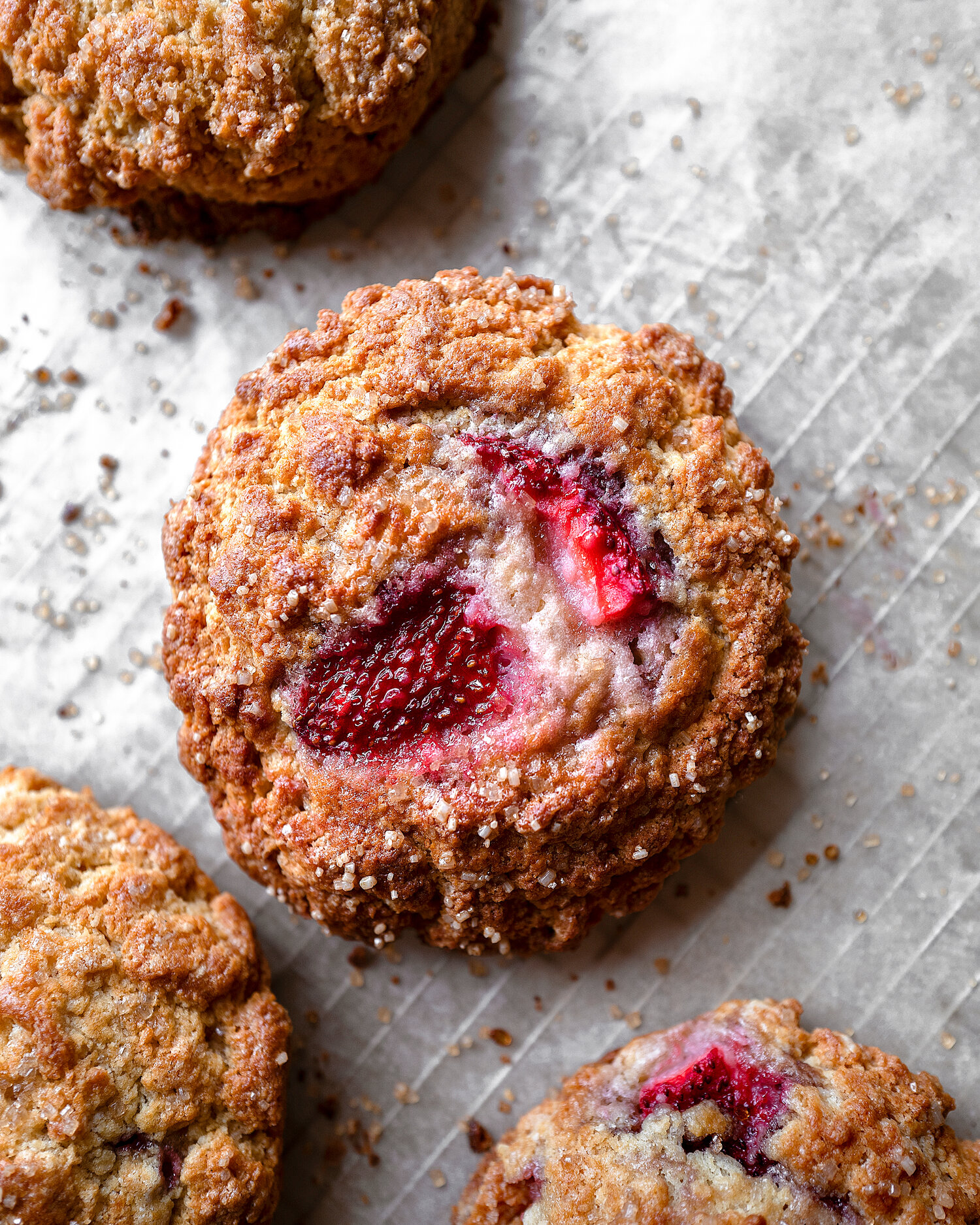
Michelle Rizzolo's Big Sur Bakery Scones + a Handy Scone Guide

michelle_rizzolos_big_sur_bakery_scones__20201116094741973736u7jbg1.jpg


Servings: about 10-12 scones
Ingredients
    • 1 cup fresh, frozen, or dried fruit (roughly chopped if larger than a raspberry)
    • 3 1/2 cups (355 grams) all-purpose flour
    • 1 cup (198 grams) granulated sugar
    • 1 tablespoon baking powder
    • 2 teaspoons baking soda
    • 1 1/2 teaspoons kosher salt
    • 1 cup (2 sticks) cold unsalted butter, cubed
    • 2 tablespoons vanilla extract
    • 3/4 cup buttermilk
    • 1/4 cup turbinado sugar
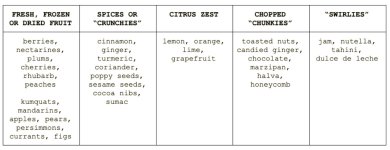
    • OPTIONAL CHOOSE-YOUR-OWN-ADVENTURE ADD-INS (see chart below):
    • 1 tablespoon spices or crunchies
    • 1 tablespoon citrus zest
    • 1/4 to 1/2 cup chopped chunkies
    • 1/4 to 1/2 cup swirlies
Steps

    • If using fresh fruit, freeze for at least 2 hours on a parchment-lined baking sheet. This will help the fruit hold its shape and prevent it from staining the dough.
    • In a large bowl, mix flour, sugar, baking powder, baking soda, and salt (and spices or crunchies if using). Add cubed butter and toss to coat with the dry ingredients. Place the bowl in the freezer for 30 minutes until butter is well-chilled.
    • Use a pastry cutter to work the chilled ingredients together until the butter is the size of peas (you can also use your fingertips to do this by smooshing the butter into the dry ingredients). Make a well in the center. Combine the vanilla and buttermilk (and zest if using) and pour the mixture into the well. Mix the ingredients with a wooden spoon to form a shaggy mass. Gently mix in the fruit (and the chunkies or swirlies if using).
    • On a parchment-lined baking sheet, assemble the scones. Flour a 2.5- to 3-inch round cookie or biscuit cutter and place it on a corner of the prepared baking sheet. Take a handful or two of scone dough and press it into the cutter, patting it down so the top of the scone is flat. Pull the cutter off the sheet, leaving the puck-like scone behind. Repeat this process across the sheet with the rest of the dough. Wrap the baking sheet with plastic wrap and freeze for at least two hours or preferably overnight.
    • When ready to bake, preheat oven to 375F. Transfer six frozen scones to a second parchment-lined baking sheet (making sure they have enough space to double in size), liberally sprinkle each scone with turbinado sugar, and bake for 15 to 20 minutes, until golden brown along the sides but still tender inside. Transfer to a cooling rack and let them sit for at least 10 minutes before serving. Repeat with remaining scone dough or save to bake off another day. Baked scones are best the day they are made, but well-wrapped, can be frozen for months and gently re-warmed in an oven or toaster-oven.

    Note:
  1. Refer to the chart for add-in suggestions. The most difficult add-in to work with is the swirlies, so skip it if you don’t want a challenge. Feel free to leave out the fruit altogether or substitute it with a full cup of chopped chunkies. Before starting, please read the entire recipe to plan time for steps that require freezing. While those steps might seem like a pain, making the dough itself is not difficult.
IMG_6250.jpeg
 
Back
Top